


Animal Haven – Farm sanctuary saves abandoned creatures
• Avon-based Kindness Matters Farm Sanctuary is in the rescue business
Bruce William Deckert
Editor-in-Chief
Today Magazine Online
• The founder of Kindness Matters Farm Sanctuary has offered an exclusive interview to Today Magazine CT — this is the second feature in a two-part series
The objective of Kindness Matters Farm Sanctuary is to provide a caring place for abandoned farm animals. Established in 2020 by Deidre Galbo, the sanctuary is located in Avon, nestled in Connecticut's Farmington Valley. She is an associate veterinarian at Farmington Animal Hospital.

Avon Health website – click this ad
"When I started a farm sanctuary during COVID as a little side hobby, I had no idea what a beautiful charity we would become," Galbo wrote in a LinkedIn post. "We now are a flourishing nonprofit with a mission to offer unwanted, neglected and abused farm animals a peaceful place to live out their lives."
The five-acre sanctuary is a haven for seven sheep, five donkeys and two goats. The Avon location is also the home residence for Galbo, her husband Mike Culligan and their three college-age sons.
By the way, the town of Avon in Connecticut is not to be confused with the Avon in Colorado or Massachusetts or New York state — or Avon-by-the-Sea in New Jersey — or Stratford-upon-Avon in England, celebrated as the birthplace of William Shakespeare.
Galbo and her husband previously lived in West Hartford and Suffield. They were raised in Newtown, Connecticut. Before moving to the Constitution State, they resided in Bethesda, Maryland and West Lafayette, Indiana. Galbo is an alum of Massachusetts-based Stonehill College and a 1999 graduate of the Purdue University School of Veterinary Medicine.
"Our goal is to rescue animals, but we are also rescuing people," says Galbo, who is 54 years old — she notes that "we also offer enrichment programs for many humans with challenges."

Christensen website – click this ad
Despite the aim of helping both humans and animals, someone might object along these lines: Since I have only so much money and time, if I'm going to help a person or an animal, I'll choose a human being — or someone might voice this opinion: I think it's wrong to give money to a nonprofit that rescues animals when there are so many human beings here in my own community and around the world who need to be rescued.
Some veterinary ethicists have acknowledged and addressed such objections, according to the National Library of Medicine. The question can be stated as follows: How ethical is it to invest resources for animal welfare when such an investment could prevent those resources from promoting the welfare of a human being?
Today Magazine asked Galbo how she would answer this animal-or-human question in the context of a nonprofit that saves animals.
"I have never encountered this inquiry before," she says. "Most people see the interconnection humans have with animals and value them to know they need respect, safety and compassion. If the question ever came up, I would share how all beings are interconnected and we all need safety, shelter, food and love in whatever form that is."
Galbo observes that human beings "have lived with and worked with animals for hundreds of years — their companionship and physical abilities have been side by side throughout history. Donkeys have been mentioned in the Bible as the only animal given the ability to speak. They have helped during all stages of U.S. history, not to mention around the world — it is important for us to care and value them."

Vincent website – click this ad
Indeed, a remarkable account in the Old Testament book of Numbers describes how God gave a donkey the power of speech. The donkey could see an angel while the non-Israelite prophet Balaam, who was riding the beast of burden, could not. The donkey essentially saves Balaam's life.
Further, in the Genesis creation account, the first human beings made in God's image receive a divine directive to exercise dominion over the animals — and by extension, since God's view of rule is rooted in love, the dominion command is evidently a call for humans to care for those creatures. In other words, in God's ideal world, dominion and authority are intended to be employed in a loving and caring way as opposed to a domineering and unkind and overly authoritarian way.
While it's apparently true that all good gifts and every divinely ordained practice can be misused or misapplied — including the care and rescue of animals — it's also unmistakable that such care is a best-practice way to live.
Galbo notes there is clear evidence for the constructive influence that Kindness Matters Farm Sanctuary has offered the humans who volunteer and visit.
The veterinarian speaks of a dementia patient who visited the sanctuary: "Her relatives said she spoke more sentences that made sense in an hour here than she had in six months. ... The feedback we receive is beautiful and many times life-changing."
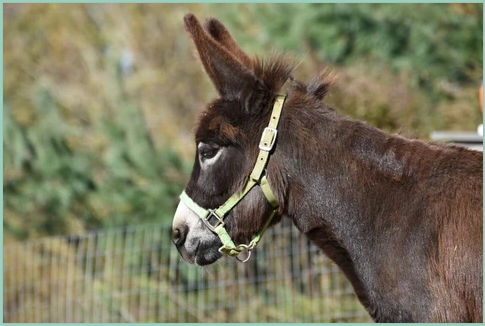
• Deidre Galbo, founder of Kindness Matters Farm Sanctuary, has answered this exclusive Q&A
Kindness Matters Farm Sanctuary Inc.
11 Bishop Lane • Avon • Connecticut
860-402-3261 – mobile
Email – kindnessmattersfarmsanctuary@gmail.com
Website – www.kindnessmattersfarmsanctuary.com
Social Media — Facebook and Instagram
Nonprofit Type — 501(c)(3)
• Year Established — 2020
• Mission — Offer a caring, compassionate and beautiful place for unwanted and neglected farm animals to live out their lives.
• Slogan — Peaceful Pastures, Loving Heart!
• Who founded your nonprofit?
Deidre Galbo • DVM – Doctor of Veterinary Medicine
• What inspired you to start this nonprofit?
I am a small-animal veterinarian and saw a need to help farm animal rescue. I fell in love with donkeys and the rest is history. During COVID we rescued our first two donkeys.
• Most fulfilling aspect of your work:
It is such a blessing to watch our farm friends frolic in the pasture. To see them free and joyful makes our hearts sing. It is also amazing to see the gift of their presence to our volunteers, visitors, school groups and people with mental or physical disabilities. The feedback we receive is beautiful and many times life-changing.
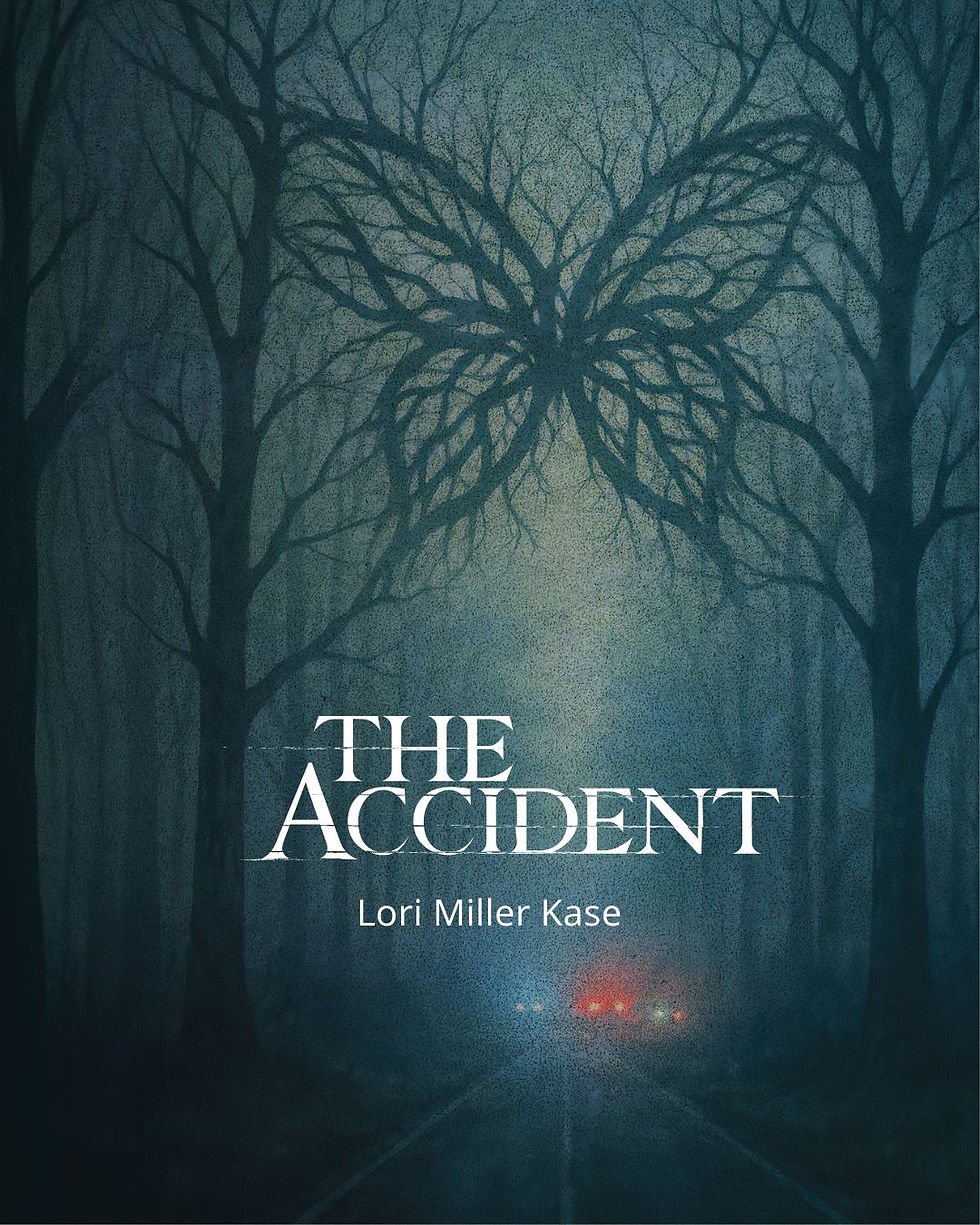
YA novel by Simsbury-based writer Lori Miller Kase
Author website – click this ad
• Your biggest obstacle, and how you overcome it:
It is challenging to make sure we do not rescue more animals than we have space and finances to support. It is hard to say no when there is suffering.
• Most satisfying accomplishment:
Our first two donkeys arrived pregnant, so we supported them through their pregnancy and were blessed with two beautiful foals in the spring of 2021. Keeping each donkey healthy through the pregnancies and the births, and then helping raise the foals, was such an amazing gift.
• What sets you apart — what is unique about your nonprofit that helps you achieve what perhaps no other nonprofit can achieve?
Our sanctuary is all about kindness to everyone. It starts with the farm friends, but we have attracted incredibly kind volunteers. We also work toward being connected to nature, and our space is pollinator- and bird-friendly. We offer education with a naturalist about farming, plants, trees and birds. We need nature and the pasture for our animals, and all are interconnected. Our space is also amazing as it is tucked between the Farmington River and Avon Mountain.
• Goals for the next 1-5 years?
Continue to provide high-quality care and a safe space, and continue to educate the public about farm animals and the unique gifts they offer us. We hope to continue to save farm animals — and people through their experience with them.
• Number of employees:
• Full-Time — none
• Part-Time — none
• Volunteers — how many and opportunities to serve:
Varies: 15-25 on average — we are a 100% volunteer organization
• A nonprofit or business leader today who inspires you — and why:
Farm Sanctuary in upstate New York is an amazing farm sanctuary that I have followed and learned from. We also work somewhat as a satellite with them. Donkey Sanctuary of the UK is also an inspirational nonprofit.
• Interesting stats and numbers associated with your nonprofit:
There are approximately 44 million donkeys in the world. They have been helping humans throughout history and are still incredibly important for many humans, especially for women in Africa.
About 1 million donkeys are slaughtered each year for the gelatin in their hides — for ejiao, a traditional Chinese medicine. This has undermined the benefits that donkeys have offered women in Africa. Donkeys help the livelihood of these women by carrying water and accomplishing other tasks.
Approximately 99% of U.S.-farmed animals (1.7 billion animals) are raised in factory farming. So when they are not needed anymore or are ill, they are shoved aside or slaughtered and disposed of. We can step in and help these animals live free, happy lives instead.
• Anecdote that illustrates how you accomplish your mission:
Every animal we rescue is one less farm friend in unlivable, rough conditions or one less slaughtered.
• How closely do you work with other agencies, businesses and nonprofits?
We connect with other rescues when needed. We have connected with the Avon Land Trust and the Avon-Canton Rotary Club.
• Besides donations, how is your work funded?
Currently we are funded by donations only. In the future we hope that we may be able to get some grand funding.
• What was your operating budget in your most recent fiscal year — what percentage was funded by donations and your other funding resources?
At this time donations are our only funding resource. As we grow we are looking into alternative sources of funding.
• Salary range for your employees and management?
No employees or management are paid.
• Provide other financial info — as you wish:
We have GoFundMe fundraisers and local restaurant fundraisers, and we take personal donations. We take donations when we offer private visits as well. We also offer naturalist lectures for a small donation.
• Tax-deductible donation status is one factor that distinguishes nonprofits from for-profit businesses — what are some other key distinctions?
Every dollar donated to KMFS goes directly to the care of the farm friends.
• What do you value most about the local nonprofit community?
The local nonprofit community is a nice resource to help each other grow and support each other’s missions. We can learn what to do and not to do to support our missions.
• What do you appreciate most about the Farmington Valley and the state of Connecticut?
We have beautiful topography for our sanctuary, but the people in Connecticut who volunteer and support us are truly amazing!
• Today Publishing covers news of interest statewide, with a focus on the Valley towns: Avon • Canton • Farmington • Granby • Simsbury
• Family
• Husband: Mike Culligan — he is second-in-command at the sanctuary
• Sons: Michael, Seamus and Ronan
• My mother Dale Galbo is also involved with the sanctuary +
• Photos and Info – Kindness Matters website
SEO: Farm Sanctuary Saves Creatures
• This article is the second feature in a two-part series — here is the first:
Creature Kindness – Sanctuary rescues neglected farm animals
SEO: Farm Sanctuary Saves Creatures
Today Magazine CT
• Community News That Matters Nationwide
• Recording Connecticut's Underreported Upside
• Covering the Heart of the Farmington Valley and Beyond
• Award-Winning
SEO: Farm Sanctuary Saves Creatures
Today Publishing produces Today Magazine Online and Today Magazine
• 5 Farmington Valley Towns • 1 Aim — Exceptional Community Journalism
• Avon • Canton • Farmington • Granby • Simsbury • Connecticut • USA


Comments